The ROI of a Strong Brand

A brand isn’t simply a design project, it’s an investment in your business, and it should give you a healthy return measured not only in marketing metrics, but in business outcomes.
Your brand is a tool that can help you grow. It can shape customer preferences, your pricing power, and how easily you can convert prospects into clients. But, just like any investment, proper brand-building requires time, attention, and a strategic long-term approach. From the start, your brand goals should be linked to your business or organizational goals.
Done right, the payoff of a strong brand is bigger than a sharp-looking logo or a moment of viral fame. It pays off in all aspects of your business and delivers tangible outcomes in your revenue, your operations, the customer experience you deliver, and your ability to hire talent and attract partners. If you want to sell your business in the future, it’s worth noting that brands make up more than 30% of the stock market value for large, publicly traded companies.
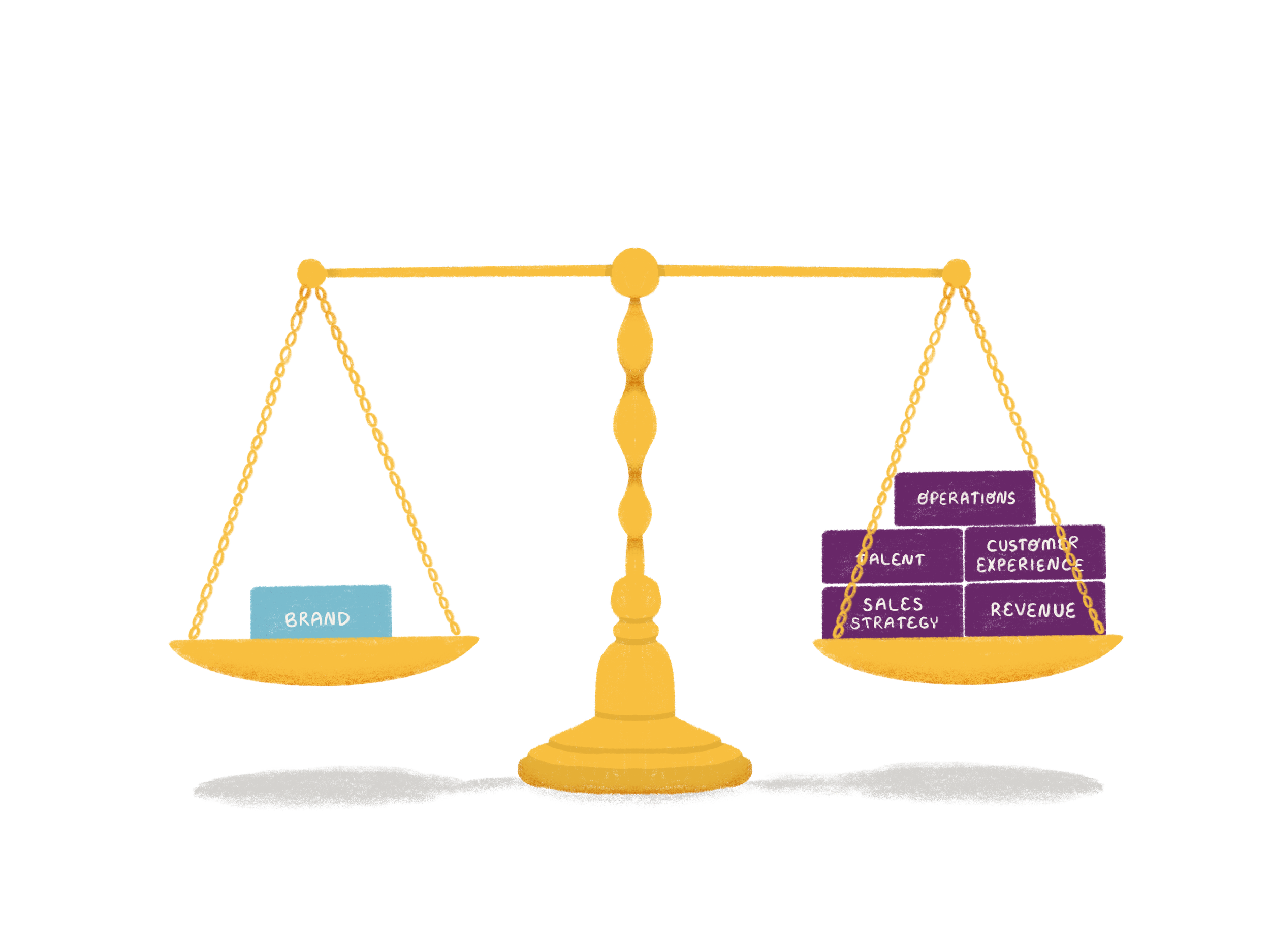
Investors like to see numbers, and here are some of the numbers associated with a strong brand:
Strong brands command a 13% price premium over weak brands.
B2B companies with strong brands outperform weak-branded competitors by 20%.
People’s willingness to buy, recommend, work for, and invest in a company is driven 60% by their perceptions of the company and only 40% by their perceptions of their products.

Brand clarity is business clarity
When you’re clear about your brand identity and position, you’re able to clearly and confidently communicate:
Who you are
What you do
Who your audience is
What they need
How you serve their needs
What makes you different from your competitors
How your brand consistently looks, sounds, and acts in the market
And, when this clarity extends to your leadership, operations, marketing, recruiting, product development, or sales teams, it inevitably influences those aspects of your organization. A well-defined brand answers the question, “Why do we do what we do?” and provides a unifying sense of purpose across the organization.
Your sales team will be able to make the right offer to the right audience at the right price, your marketing and business development teams will have a clear direction in which to build, and your customer experience will become more intentional and attractive.
For non-profit organizations, like police agencies or independent schools, the ROI of a strong brand is a version of the above: increased community engagement and ability to fundraise, improved operations and services, better recruiting and enrollment, and a unified culture that focuses employees on a common purpose.
And brand clarity doesn’t just serve your team. Metabrand notes – as do other researchers – that, “Knowing exactly what a company stands for and what to expect is, itself, a form of value that customers will pay for... In a world of overwhelming choice and information overload, brands that communicate clearly earn premium positioning.”
Other ways a strong brand pays off
It can help you:
Increase the perceived value of your product or service, leading to more profitable pricing
Inspire customer loyalty – not only are loyal customers your best brand ambassadors, it costs less to sell to returning customers than it does to market to new ones
Convert prospects faster, because they recognize and trust your brand
Ensure the products and services you offer are a match for your customers’ or community’s needs
Be more competitive in the marketplace by clearly communicating your benefits and what makes you different
Launch into new markets, or launch new products and services
Attract and retain employees – strong reputations attract top talent and partners
Create a cushion of goodwill in the event your organization makes a misstep
Brands have a lifecycle, just like companies
To realize the biggest payoff, it’s important to take a long-term strategic approach to brand-building and tie it to your business strategy. A brand evolves over time with the organization and the market it serves.
When your business is new, your brand is a tool to help you get noticed, stake a position in the market, and establish credibility. It can help you attract investors, employees, and your first customers.
As your business grows, your brand helps you build a consistent identity in the market so that your employees, customers, or community know what to expect from you and come to trust the experience you offer. You’re looking to expand awareness of your product or service, solidify your relationship with your audience, and set your direction going forward. Internally, you’re using your brand to help you build a culture that attracts and retains talent.
As your business matures, your brand evolves with it. By now, your organization has deeper brand stories to tell – the kind that reinforce your identity, and offer proof of your primary selling points and performance.
At some point, you may need to refresh your business. Perhaps it’s time to explore new markets, expand your offer, or respond to new competition or changing market conditions. If you have a solid brand, instead of rebuilding from scratch, a thoughtful refresh of your brand identity with new messaging will help you stay relevant, re-invigorate your culture, or reposition you in the market.
A strong brand pays off at all its touch points
A strong brand is one of the few business investments that can create value everywhere it touches – from helping you attract the right customers and employees, to strengthening your operations, focusing your decisions, and increasing the value of the organization, itself.
The real ROI of brand-building isn’t a single number, it’s a cumulative effect. When your brand is grounded in your business strategy and built to evolve with you, it becomes more than a marketing asset—it becomes a powerful engine for growth.


Looking for more ideas from StudioTalk?
StudioTalk is our free, quarterly newsletter full of practical design, branding, and customer relationship-building ideas to help you grow your business.