
What Police Agencies Need to Know to Recruit and Retain Female Officers
Ongoing recruiting challenges across Canada, along with EDI policies, have motivated many agencies to examine how they can do a better job of attracting women to policing. Female officers bring many benefits to an agency, but women are a largely untapped resource that recruiting teams often struggle to connect with in a meaningful way.
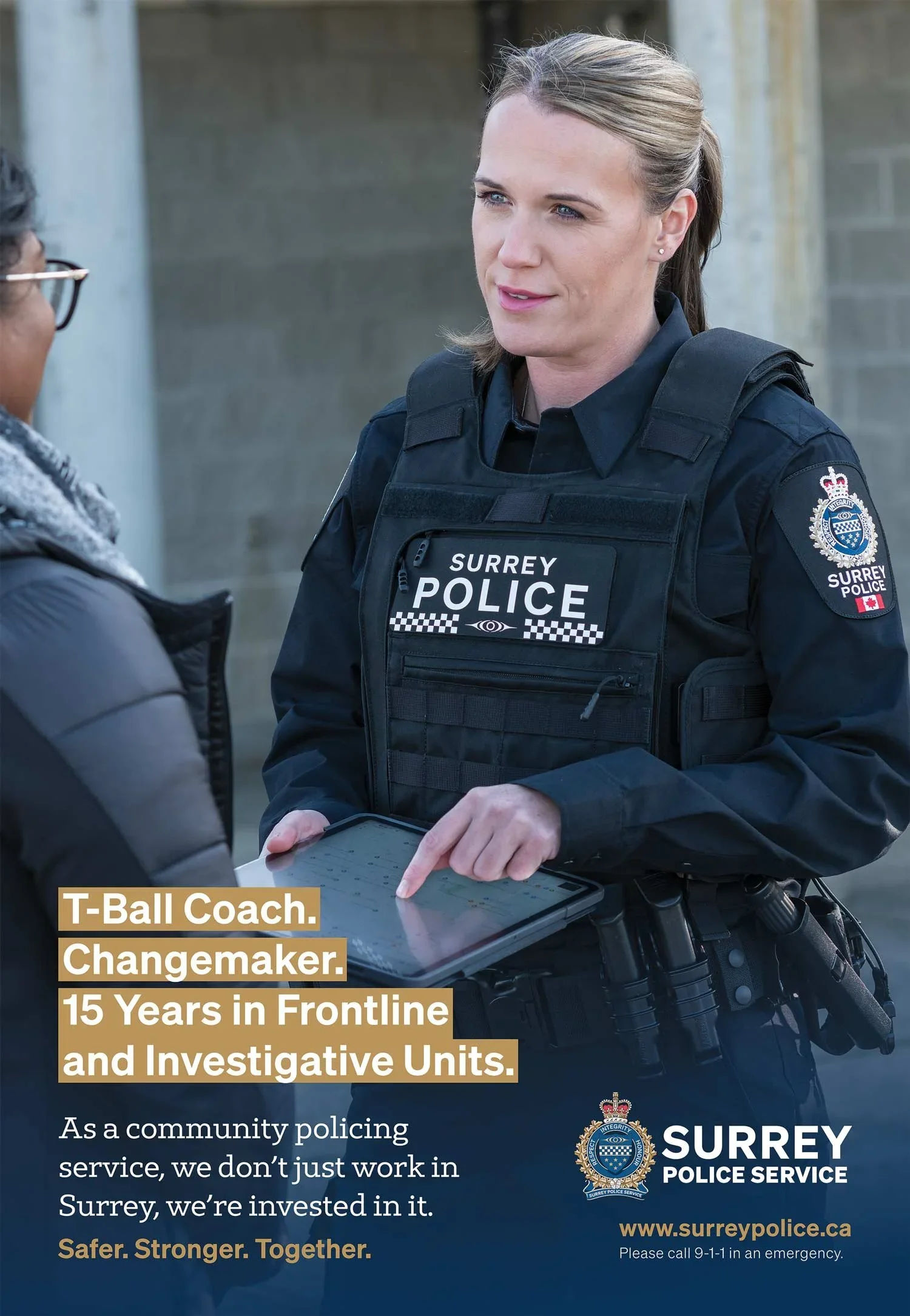
The problem for many agencies hoping to attract more women, is that they don’t know the answers to the three questions we ask at the start of every successful recruiting campaign:
Who are we talking to?
What are their needs?
What is our offer – how do we meet those needs?
It’s not enough to feature female officers in recruiting ads. The agencies we’ve worked with who are seriously interested in attracting and retaining more female employees, are working hard to understand the needs and concerns of the audience they’re targeting.
They’re not just getting women in the door, they’re looking at what happens after women join. They’re talking to current female staff, looking at the research, and examining their policies, benefits, culture, and promotion practices to see where the barriers and biases lie. Then they’re using their findings to improve their offer – not only to female applicants, but to applicants overall.
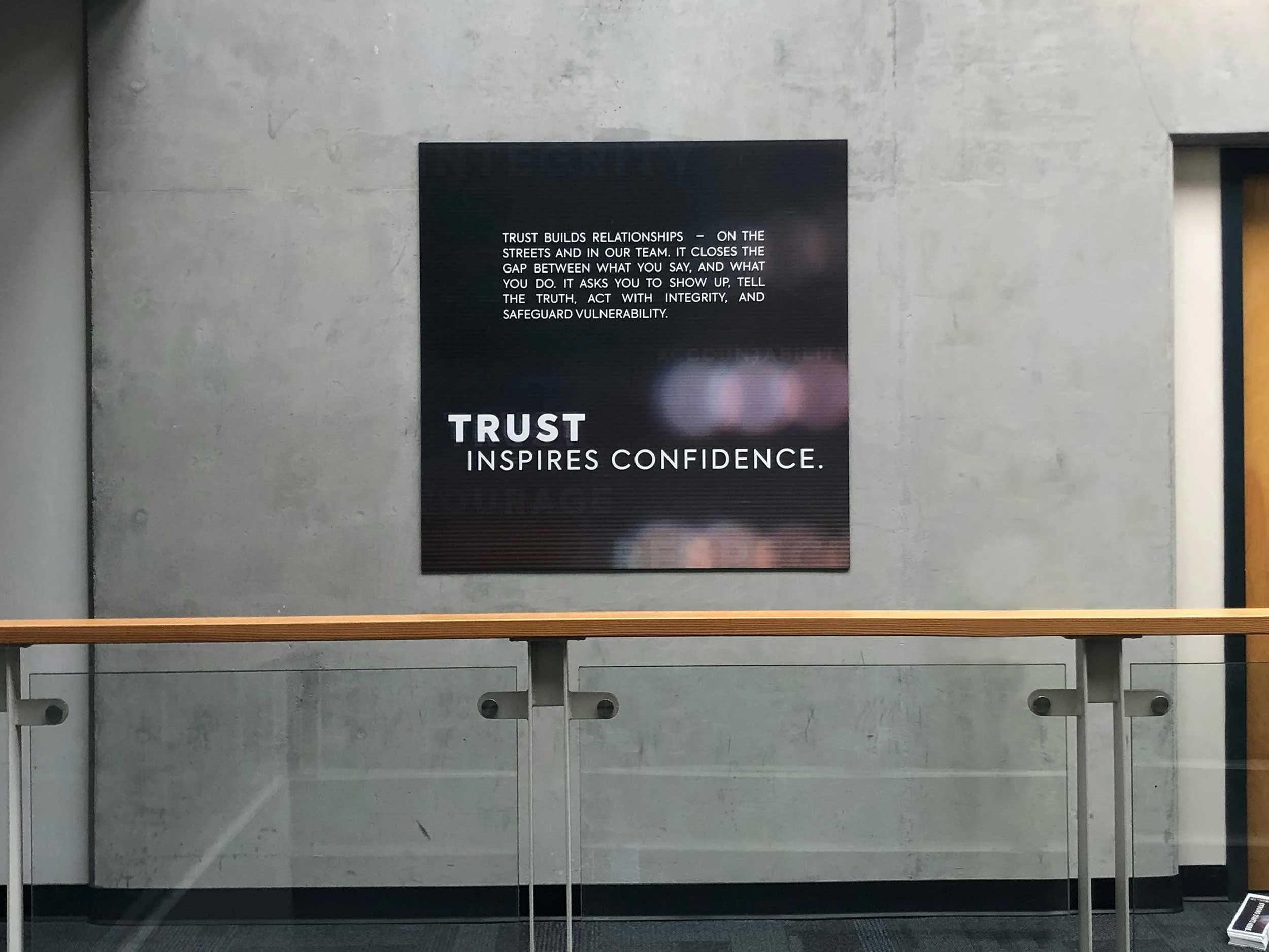
Port Moody Police Department Interior Signage
Joining an agency isn’t the same as feeling like you belong
Forward-thinking agencies are listening to feedback that says just adding female officers into the mix isn’t enough; diversity is not the same as inclusion. They are working to build a female-friendly employer brand, which research shows will not only help them attract more women, it will establish them as a desirable employer across the board.
Below, we outline how female officers benefit policing, what some of the most common challenges are to attracting and retaining women, and how you can begin to build a female-friendly brand as a pillar of your recruiting efforts.
How do female officers benefit police agencies?
According to 30Forward, a Canadian initiative dedicated to advancing women in policing, when agencies increase their representation of women, the effect ripples outwards: it strengthens community relationships, builds public trust, and contributes to more effective policing. And, when more women are in leadership roles, it results in more support for the welfare and well-being of officers, overall.
Empirical evidence from the US, UK, Australia, and Canada shows that female police officers benefit agencies in a range of ways, for example, they:
Use force less often and when they do use force, use less excessive force
See better outcomes for victims of crime, especially victims of sexual assault
Strengthen collaboration and communication on teams
Are named less often in complaints and lawsuits
May cost an agency 2.5 to 5.5 times less over the course of their career than their male counterparts
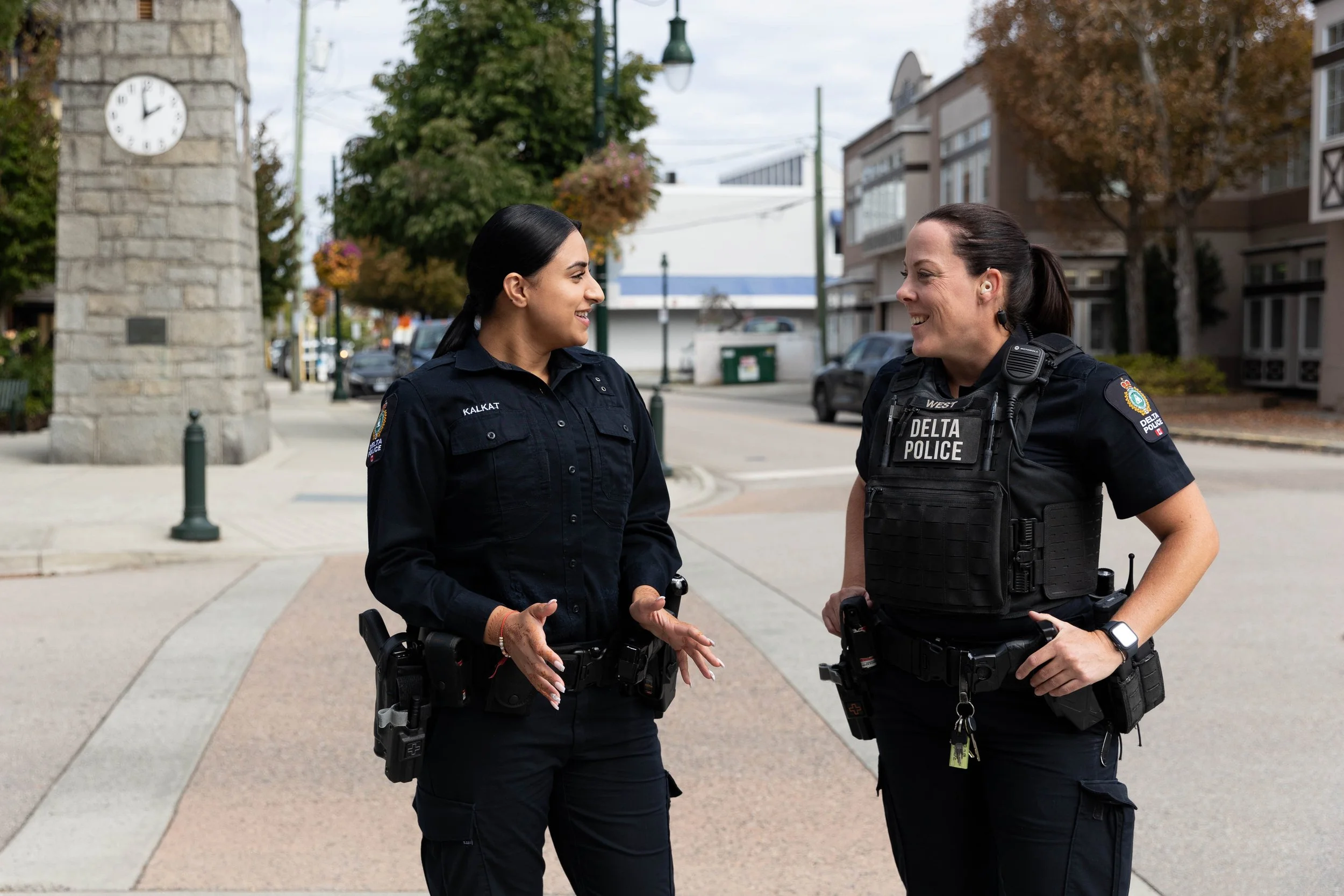
Credit: Delta Police Department
What are some of the barriers for women in Canadian policing?
In 1993, females made up only 8% of sworn employees at Canadian police agencies. By 2023, that number had risen to 23%, but 71.7% of those employees were at the Constable rank, and only 3.8% were at Inspector and above.
In April 2019, Wilfrid Laurier University hosted a workshop that presented research on the institutional policies, practices, and culture that negatively affect women in policing, including:
An “old boys club” culture that isolates women from informal networks at work
Difficulty with work/life balance; lack of family-friendly policies
Outdated or non-existent polices specific to female health, such as pregnancy leave
Limited promotional opportunities – being excluded from or competing against other women for limited positions in a system of “tokenism”.
The expectation of an uninterrupted career for promotions, which disproportionately affects women who take maternity leave.
Lack of mentors at higher ranks, especially in smaller organizations
Sexual harassment and gender-based discrimination in the workplace that is unaddressed
Being forced to repeatedly prove their physical and emotional strength in an attempt to be accepted
They also found that officers who become pregnant and take maternity leave often:
Encounter negative workplace responses to pregnancy
Experience demotion or reassignment during maternity leave, or are excluded from promotional opportunities
Have to re-prove themselves as officers upon returning from maternity leave
Wilfred Laurier University offers a downloadable resource, Gender, Policing and Inclusion: Opportunities for Change, which takes a closer look at these issues. It recommends actionable steps an agency can take to address barriers encountered by female employees.

Two key steps to creating a female-friendly recruiting campaign and brand
Police agency brands have two sides – the public-facing one, which speaks to the community, and the internal-facing one, which speaks to its employees. Both are important to recruiting. Your internal brand shapes how your people feel about working for you – and whether they stay or leave, or promote you through word-of-mouth. (We write about its importance to recruiting in this blog.) Police agencies that truly want to attract and retain more women need to think beyond their external-facing brand (images of women officers in ads), to the factors that influence female officers’ workplace experience. If your agency is hoping to attract and retain more women, there are two key areas it needs to address:
Perceptions of the job and what it entails
Gender-inclusive policies, programs, and culture
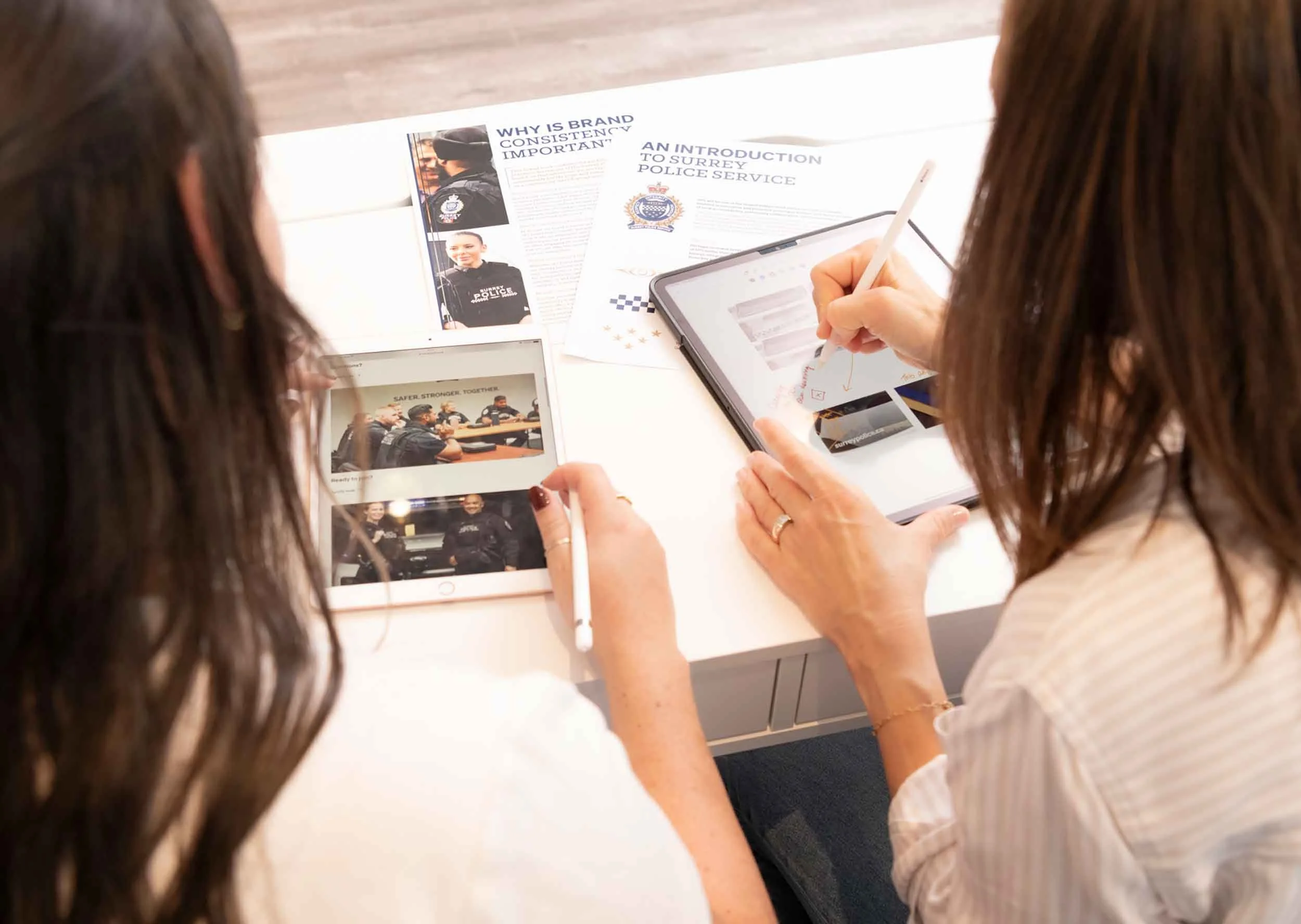
Send the message that policing is a fit for females
Many women aren’t aware of the opportunities that exist in policing, or have been led by American TV shows to believe that it’s a highly dangerous occupation whose primary requirements are aggression and physical strength.
When your recruiting team presents to a female audience, talk about the teamwork and training that keeps all members safe, and about the reality of Canadian policing. (New Zealand Police Service ran remarkably successful recruiting campaigns in 2017 and 2018 that increased their number of female hires. They “demystified” policing by showing how ordinary people could be a fit for the job. We break down their approach in this blog.)
To attract female officers, create a recruiting campaign that:
Shows images of female officers
Tells an accurate story about the job and the required knowledge, skills, and abilities (if rappelling down buildings is .0001% of the job, don’t make it the focus of your recruiting videos)
Offers female-only information sessions with female staff in attendance, and “coffee with a female cop”
Includes programs such as female-only POPAT training
Features the stories of current female officers
Highlights information about family-friendly policies
Instead of talking only to women who are ready to apply, also think about how you can appeal to women who may never have considered the profession. Consider targeting niche groups with a high representation of females whose jobs typically require them to be service-minded, emotionally intelligent, good communicators and critical thinkers, and who use teamwork and de-escalation techniques. For example: nurses, social workers, and educators.
Build a female-friendly (human-friendly) culture and workplace
Organizations like 30Forward aren’t advocating for special treatment for female employees, they’re asking agencies to consider their basic needs, and to be intentional about identifying and addressing bias.
It’s not enough just to bring women in the doors of agencies, or to leave them stuck in entry-level positions. To retain female employees, agencies need to provide the mentorships and build the systems that will support them in advancing – systems that will ultimately benefit all employees.
Become an ally. Allies, particularly those in high-ranking positions, are important for change – they listen, think about, and invite discussion on issues. They identify and eliminate barriers, and create the policies and systems in which employees can thrive. Allies make sure women have a voice at the tables they’re not currently sitting at.
Build a mentor network. All employees benefit from mentorship, and mentors for women don’t have to be female. But, if your agency lacks high-ranking females, advise female employees that they can access the 30Forward Mentor Network, designed to connect women in policing with experienced mentors, peers, and leaders.
Consult with female officers to identify “invisible” issues. Many of the things that make female officers’ work more difficult are invisible to their male counterparts – for example body armor or uniform pants designed for male bodies.
Build a zero-tolerance culture for sexual harassment. Sexual harassment remains a systemic issue, with women in Canadian policing experiencing higher rates of victimization than men and women in the general population. Complaints are often underreported due to a "code of silence" within police services, and women who report harassment often face retaliation.
Ending sexual harassment in the workplace requires culture, policy, and enforcement to work together. Encourage all officers, not just those affected, to step in, speak up, and file complaints.
Design policies and systems to support employees through life’s stages: Certain life stages are predictable – pregnancy, parental leave, child care, and caregiving – and not all are unique to women. Proactively design policies and systems that support employees through them, rather than forcing them to choose between their career and families, or health. From part-time work, to innovative shift scheduling, solutions that support work/life balance can be the key to retaining skilled and experienced employees.
For example, Ottawa Police Service employees have a collective agreement that protects female employees from having to attend court up to six weeks after giving birth. And, Hamilton Police Service has established a “mothers’ group” that helps female officers stay connected to the agency and to other agency parents throughout their 18-month maternity leave. It helps them feel less disoriented and isolated on their return – particularly if they’ve been transferred while on leave.
It’s an idea borrowed from New Zealand Police’s “Mums in Blue” community, which began as an online forum of support for women balancing a policing career and parenting, but soon attracted the involvement of senior leaders interested in retaining experienced officers returning from pregnancy.
Join 30Forward: Signal that your agency is working on achieving a gender-balanced workplace, and that you’re informed about the issues facing female employees. 30Forward is an excellent source of data, ideas, and resources, and a place to learn about the policies and practices that can help you recruit and retain female employees. As of April 2026, 24 Canadian police services have signed on.
30Forward’s goal is to see 30% representation of women across policing organizations in Canada. Critical mass theory says that when an underrepresented group reaches at least 30% representation they reach the tipping point, and start to have an effect on culture and policies, and a voice at the table. They are no longer the exception, they are the norm.
Our women-led branding team can help you build a female-friendly recruiting campaign
Indalma Creative has been working with Canadian police agencies for more than 15 years, helping them build strong brands, successful recruiting campaigns, and inspiring internal cultures. Our women-led team has the insights and experience to help your agency explore its opportunities and challenges recruiting women, and to help you put the elements in place that will resonate with a female audience.
Interested? You can reach our Chief Brand Strategist, Angela McGregor at angela@indalmacreative.com